
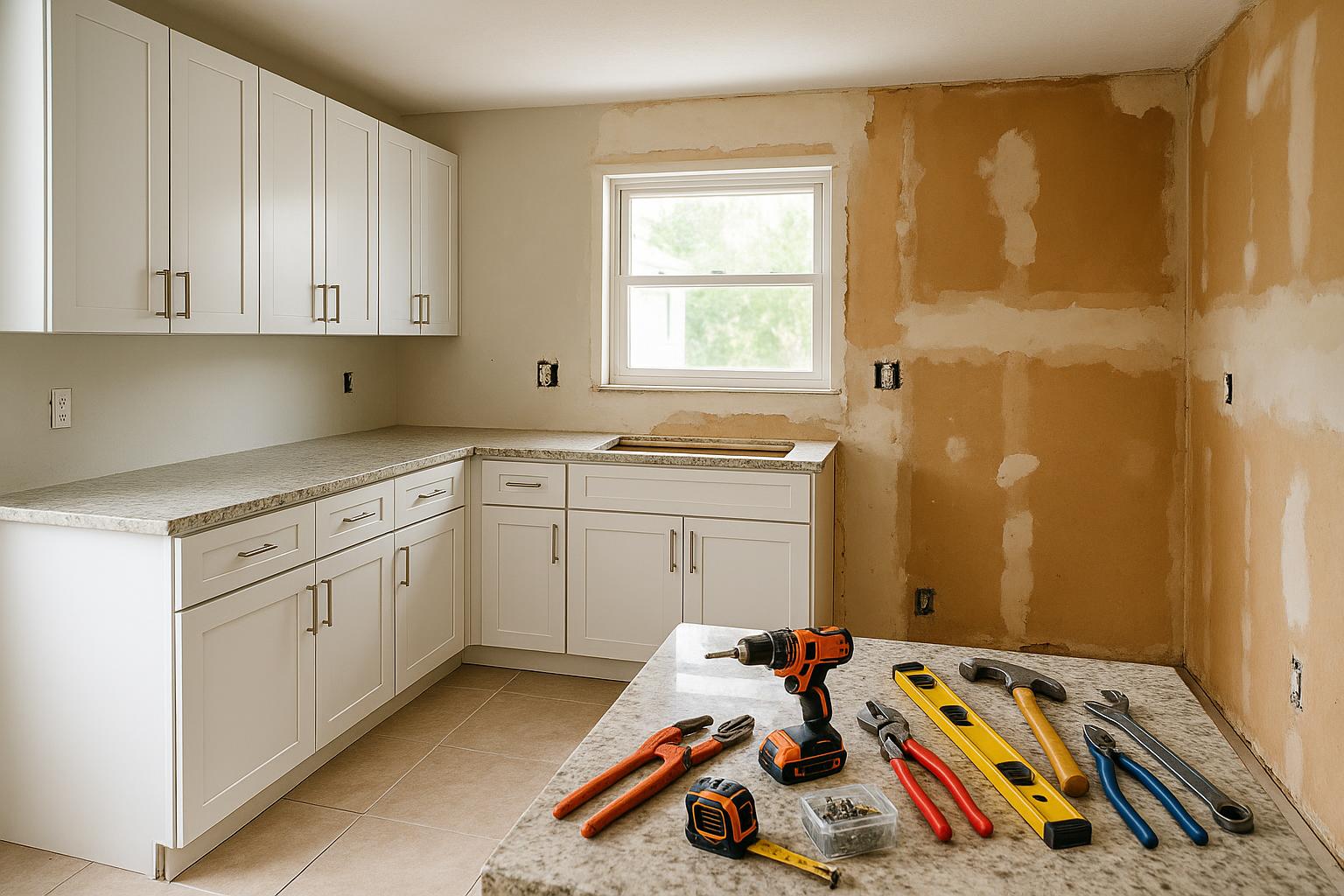
The Question Every Homeowner Asks First
You've been dreaming about a new kitchen for months — maybe years. The layout doesn't work, the cabinets are falling apart, and the countertops have seen better decades. You're ready to pull the trigger. But before you commit, there's one question that stops almost every homeowner in their tracks: how long is this actually going to take?
It's a fair question. Your kitchen is the most-used room in your home. Living without it for weeks — or longer — affects your daily routine, your family's meals, and your sanity. Here in Oakland Park, where many homes were built in the 1960s through 1980s, kitchen remodels often involve more than just cosmetic updates. Understanding the real timeline helps you plan ahead, set expectations, and avoid unnecessary stress.
The Short Answer
A typical full kitchen remodel takes 6 to 12 weeks from demolition to completion. A smaller refresh — think new countertops, a backsplash, and updated fixtures — might wrap up in 3 to 4 weeks. A major gut renovation with layout changes, new plumbing, and custom cabinetry can stretch to 14 weeks or more.
But those are just ranges. Let's break down what actually happens during each phase so you can see where the time goes.
Phase 1: Design and Planning (2–4 Weeks)
This is the phase that happens before any hammer swings, and it's arguably the most important. During the design and planning stage, you'll work with your remodeling team to:
- Finalize the layout and floor plan
- Select cabinets, countertops, tile, fixtures, and appliances
- Establish a detailed budget
- Obtain necessary permits from the city
In Oakland Park, permits for kitchen remodels that involve electrical, plumbing, or structural changes are required through the city's building department. Permit approval can take anywhere from a few days to a couple of weeks depending on the scope of work. A good contractor handles this process for you, but it's worth knowing it's part of the timeline.
Pro tip: The fastest way to slow down your project is to delay material selections. Cabinets, in particular, can have lead times of 3 to 6 weeks. Order early.
Phase 2: Demolition (2–5 Days)
Once permits are approved and materials are ordered, demolition begins. This is the exciting — and messy — part. Old cabinets, countertops, flooring, and sometimes walls come out. If you're changing the layout, this is when the space starts to transform.
Demolition itself is quick, usually wrapping up in less than a week. But it's also when surprises can appear. In older Oakland Park homes, it's not uncommon to find outdated wiring, corroded plumbing, or even minor water damage hidden behind walls. A reputable contractor will address these issues before moving forward, which may add a few days but protects you in the long run.
Phase 3: Rough-In Work (1–2 Weeks)
This phase covers the behind-the-scenes infrastructure that makes your kitchen function. It includes:
- Plumbing: Moving or adding water lines and drain connections for sinks, dishwashers, or refrigerators with water dispensers
- Electrical: Adding circuits, outlets, and wiring for new lighting or appliances
- Framing: Adjusting walls if the layout is changing
Each of these trades requires inspection before the walls can be closed up. Scheduling inspections efficiently keeps the project on track. Experienced remodeling companies in South Florida know how to coordinate these inspections to minimize downtime.
Phase 4: Drywall, Painting, and Prep (1 Week)
Once inspections pass, the walls get patched or replaced with new drywall, then primed and painted. This phase also includes any ceiling work and preparation for cabinetry installation. It's a transitional stage — your kitchen won't look like much yet, but the foundation is set.
Phase 5: Cabinetry and Countertop Installation (1–2 Weeks)
This is where the transformation becomes visible. Custom cabinetry is installed first, carefully leveled and secured. Once cabinets are in place, countertop fabricators come to do a final template measurement. Countertops — whether quartz, granite, or another material — are then fabricated and installed, which typically takes about a week after templating.
For homeowners who choose custom cabinetry, the wait is worth it. Stock cabinets install faster but don't offer the same fit, function, or quality that a custom solution provides, especially in kitchens with unusual dimensions or specific storage needs.
Phase 6: Tile, Flooring, and Backsplash (3–5 Days)
With countertops in place, tile and flooring installation begins. Whether you're going with porcelain tile, luxury vinyl plank, or natural stone, this phase brings the design together. Backsplash tile is typically installed after the countertops so everything lines up cleanly.
South Florida's humidity can affect certain flooring materials, so it's important to choose products rated for our climate. Your remodeling team should guide you toward materials that perform well in the heat and moisture we experience year-round.
Phase 7: Fixtures, Appliances, and Final Details (3–5 Days)
The finish line is in sight. During this final phase, your contractor installs:
- Sinks and faucets
- Light fixtures and under-cabinet lighting
- Appliances
- Cabinet hardware
- Trim and molding
A final walkthrough ensures everything meets your expectations. Any touch-ups or adjustments are handled before the project is officially complete.
What Can Delay a Kitchen Remodel?
Even with the best planning, delays happen. The most common causes include:
- Material backorders: Supply chain issues can push delivery dates. Ordering materials as early as possible reduces this risk.
- Permit delays: Complex projects may require additional review time.
- Hidden problems: Mold, termite damage, or outdated plumbing discovered during demolition.
- Change orders: Changing your mind mid-project — while completely your right — adds time and cost.
The best way to stay on schedule is to make decisions early, trust your contractor's process, and build a small buffer into your expectations.
How to Survive Without a Kitchen
Living through a kitchen remodel requires a little creativity. Here are a few tips Oakland Park homeowners have found helpful:
- Set up a temporary kitchen station in another room with a microwave, toaster oven, and coffee maker
- Use paper plates and disposable utensils to minimize dishwashing
- Stock up on easy-prep meals and take advantage of the great local restaurants nearby
- Keep a cooler with ice for essentials if your refrigerator is disconnected
Planning Your Kitchen Remodel in Oakland Park
A kitchen remodel is a significant investment of time and money, but the payoff is enormous. You get a space that works better, looks beautiful, and adds real value to your home. Understanding the timeline upfront helps you plan around it — whether that means scheduling the project during a vacation, arranging temporary meal solutions, or simply knowing what to expect week by week.
At Aura Home Extension, we guide Oakland Park homeowners through every phase of the remodeling process, from initial design to final walkthrough. We provide clear timelines, communicate proactively, and keep projects moving efficiently so you can get back to enjoying your home as quickly as possible.
If you're considering a kitchen remodel and want a realistic timeline for your specific project, reach out to our team for a free consultation. We'll walk through your goals, assess your space, and give you an honest estimate of what to expect.